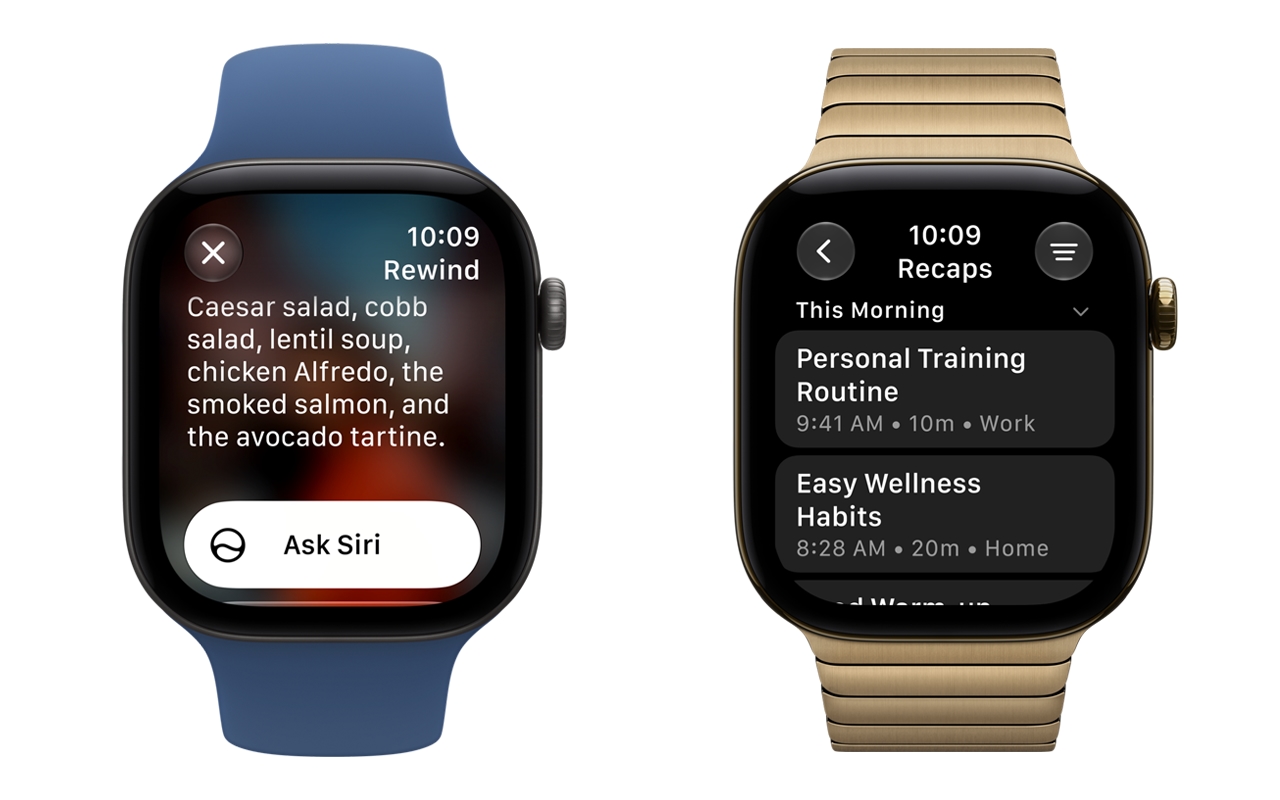

The new Live Rewind and Siri Recap features for Apple Watch Series 12 and Apple Watch Ultra 4 sound convenient. Live Rewind lets you recall anything said in a conversation in the past 15 seconds, while Siri Recap takes notes throughout the day and turns them into an Apple Intelligence summary.
That’s fine until a meeting covers sensitive information like a personnel dispute, trade secrets, legal advice or patient information. Before a watch turns workplace conversations into saved notes, employees need to know when that’s appropriate and where the notes may end up.
Apple says both features will arrive in beta later in 2026, which gives businesses time to set rules and tell employees when they can use them.
Understand What the Features Will Do
Apple describes two different ways to help people remember conversations:
- Live Rewind: Double-pressing the Digital Crown shows text from the previous 15 seconds of conversation. You can ask Siri about it or save the snippet to the Siri app.
- Siri Recap: When turned on, this feature creates a title and key points from conversations for later review. It’s meant to give a summary, without identifying who said what.
Both features are opt-in, and Apple says users will be able to control when and where Siri Recap runs or turn it off from Control Center. Live Rewind plays a chime even when the watch is silenced, along with an on-screen animation and microphone indicator.
Apple says neither feature stores audio recordings. Protected hardware processes the audio and then deletes it. Saved text is end-to-end encrypted when it syncs through iCloud in the Siri app.
These are sensible protections, but they don’t cover every concern a business might have.
Decide Which Conversations Are Appropriate
Start with situations your employees actually run into. A chat about rearranging the break room carries different expectations than a performance review or a client describing an unreleased product.
We recommend a short written policy that covers:
- Permitted uses: Name the kinds of conversations where employees may use these features. Consider starting with approved, non-sensitive meetings only.
- Confidential discussions: Spell out where the features must stay off, such as personnel meetings, legal consultations and discussions involving client secrets.
- Notice and permission: Tell employees how to explain the intended use and get permission before a conversation starts. Give everyone an easy way to say no.
- Personal devices: Apply the policy to employees’ own watches and phones as well as company equipment. Say who to contact about accessibility needs or exceptions.
A chime is no substitute for asking permission, and a colleague’s Apple Watch isn’t proof that note-taking is on.
Have legal counsel review how privacy and consent rules affect your policy. Employees also shouldn’t assume that the lack of an audio file makes every use acceptable.
Plan for the Notes That Remain
According to Apple’s support documentation, unsaved Siri Recap summaries disappear automatically after 7 days. Users can also save or export summaries and Live Rewind snippets to other apps. Deleting an item in Siri removes it from synced devices, but don’t assume that also pulls back copies already exported or shared.
Decide which accounts and apps may hold work-related notes, who may receive them and how long to keep them. Include a process for reporting when confidential information is captured by accident, and make it clear who to notify.
Apple warns that summaries and snippets may leave out or misunderstand important details, and that its sensitive-information filtering may not catch everything. Require employees to double-check commitments, deadlines and prices before acting on a summary or adding it to an official record.
Healthcare Businesses Need a Closer Review
A patient conversation needs more scrutiny than an ordinary staff meeting. A medical practice considering these features should bring in its privacy or compliance lead and IT adviser before letting employees use them around patient information.
HHS guidance explains that a cloud provider storing electronic protected health information for a HIPAA covered entity is a business associate, even if it can’t decrypt the information. That provider must meet the HIPAA requirements for business associates, and the right business associate agreements and other HIPAA safeguards still apply.
Apple’s current iCloud terms also create a contract problem. Under “Requirements for Use of the Service,” they bar covered entities, business associates and their representatives from using iCloud to create, receive, maintain or transmit protected health information.
Before approving any use, ask:
- Where will patient information travel? Apple says Siri Recap uses Private Cloud Compute to create summaries. Review processing, syncing and exports separately instead of assuming everything stays on the watch.
- Do the applicable agreements allow this use? Identify which services are involved and whether the needed contract protections exist for those specific services.
- Can the organization control the resulting notes? Think about access, retention, corrections, employee departures and accidental sharing from personal accounts.
- Who will verify clinical details? Don’t treat an automatic memory aid as an approved clinical documentation system.
Until those questions are answered, we recommend keeping these features off for work conversations involving patient information. Handle patients’ own use separately, with clear notice and a conversation about it.
Prepare Now, Test After Release
Apple currently lists Apple Watch Series 12 or Apple Watch Ultra 4, a supported paired iPhone, Apple Intelligence and Siri AI as requirements, with additional language and regional limits.
For now, pick someone to update your device and confidentiality policies. Ask your IT provider which management controls will be available when these features launch, especially for personally owned devices.
If your business approves a trial, start with a small group and non-sensitive conversations. Check how activation, saved notes, exports and deletion work before expanding access. Employees should have a clear answer to “May I use this here?” before their watches offer to help.
Need help writing an Apple Watch policy for your team? Book a call with David or email help@arobasegroup.com.
Get tips like this in your inbox
Tech That Works For You is our weekly newsletter with practical Mac, iPhone and workflow tips for your business. Unsubscribe anytime.